Semester 1 Breakdown
Signal Visualization: Wave Arrival
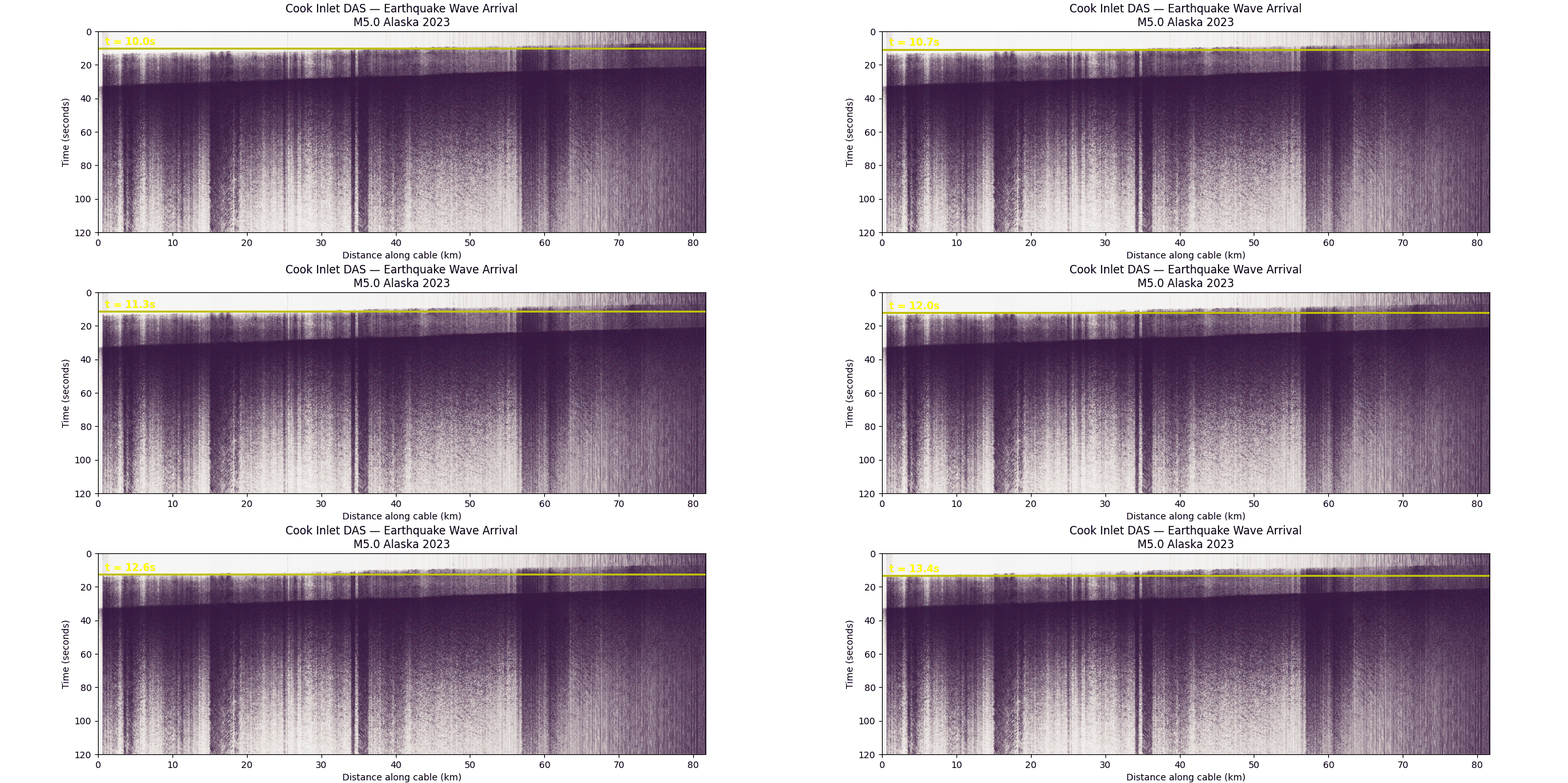
Seismic wave propagation across an 81.65 km seafloor cable. This visualizes the P-wave and S-wave arrivals from the Cook Inlet M5.0 Earthquake, demonstrating the system's baseline detection capabilities.
Frequency Filtering
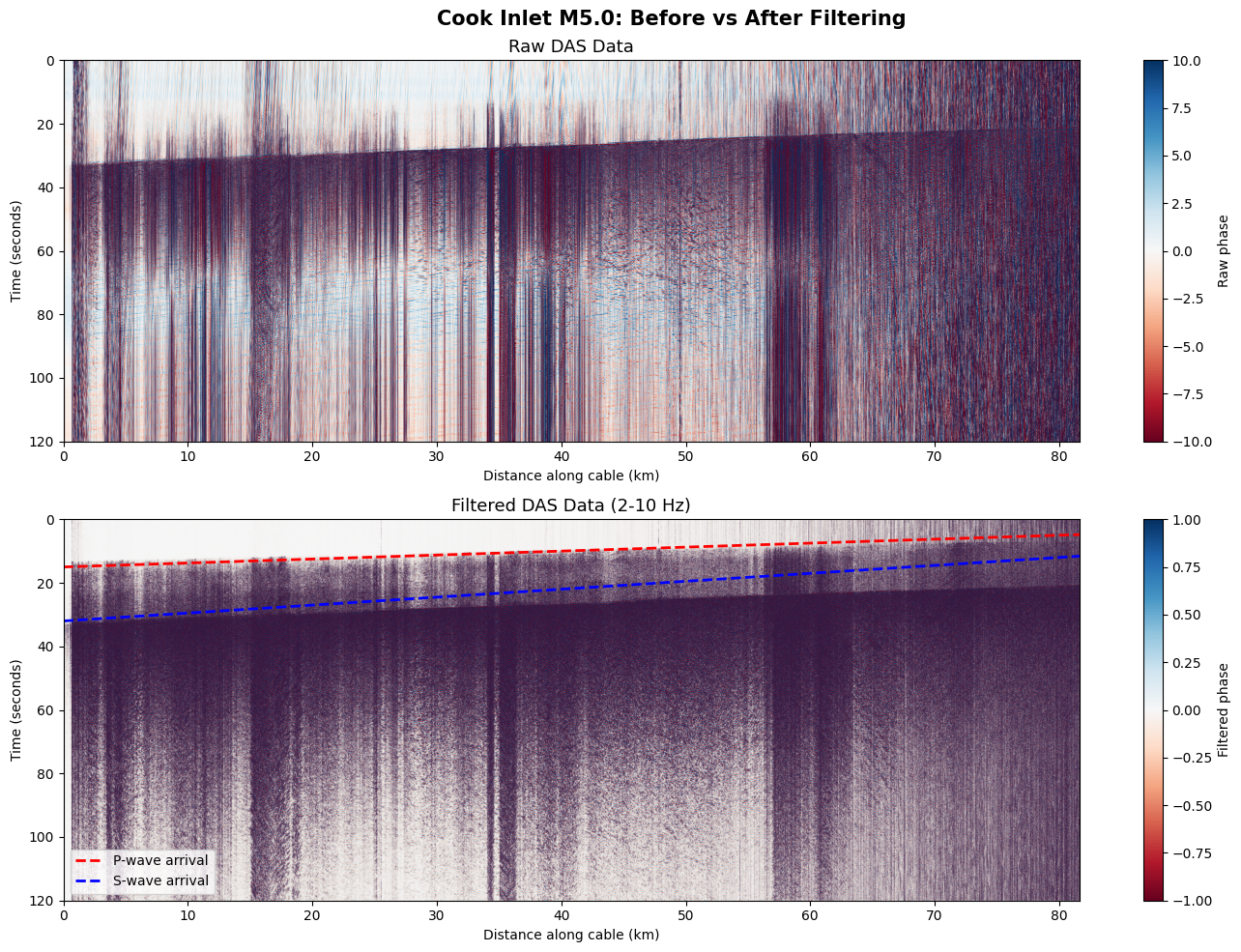
Cook Inlet M5.0 Earthquake (2023): Filtered DAS Waterfall (2–10 Hz). Red line indicates P-wave arrival (~8 km/s apparent velocity), blue line indicates S-wave arrival (~4 km/s). Diagonal wavefront pattern confirms seismic wave propagation across 81.65 km of seafloor cable.
STA/LTA Event Detection
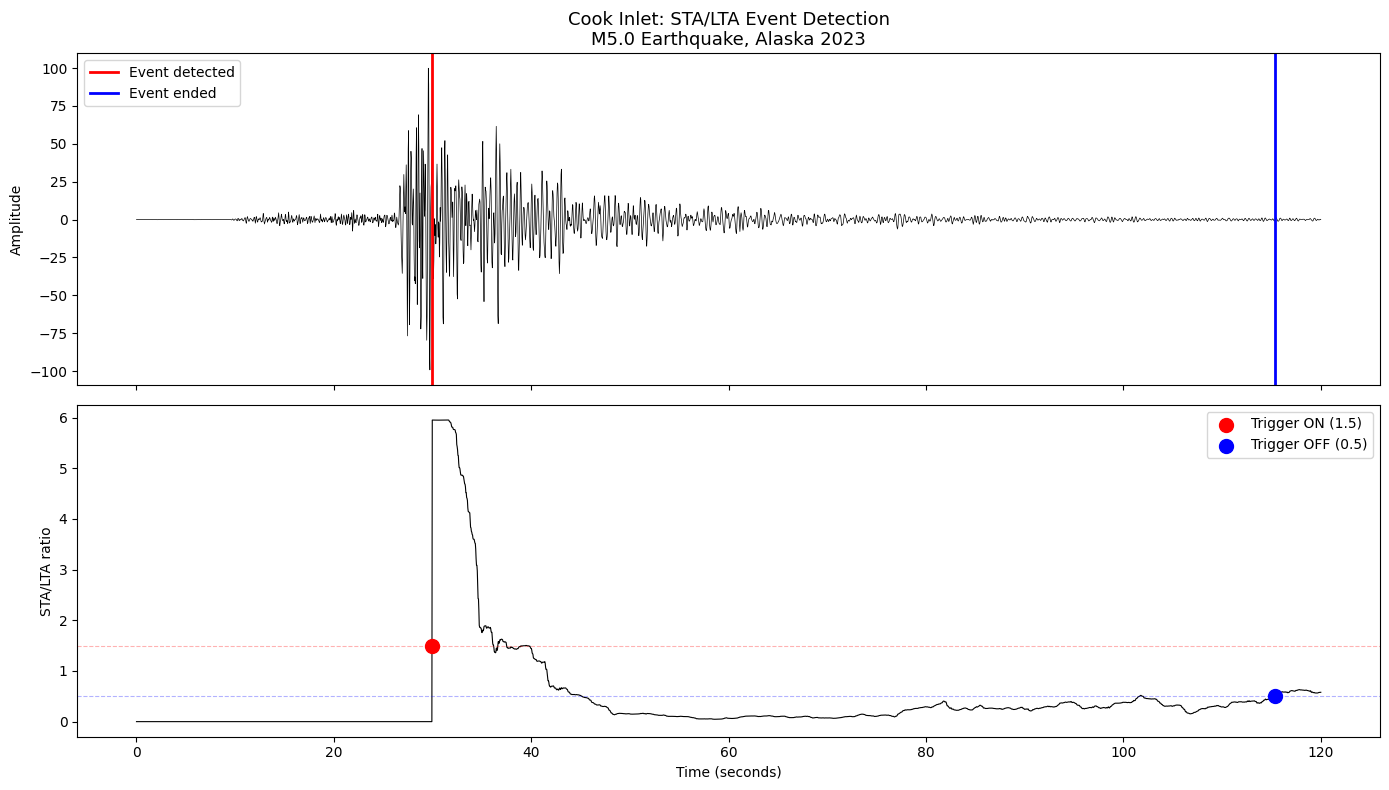
Cook Inlet M5.0: STA/LTA Automatic Event Detection. Top panel: single channel waveform with trigger-on (red) and trigger-off (blue) markers. Bottom panel: STA/LTA characteristic function showing ratio spike at earthquake arrival. Detection threshold set at 1.5.